
At Achieve, we're committed to providing you with the most accurate, relevant and helpful financial information. While some of our content may include references to products or services we offer, our editorial integrity ensures that our experts’ opinions aren’t influenced by compensation.
Home Equity Loans
HELOC rates in Washington state and what affects them
Sep 16, 2026

Written by

Reviewed by
Key takeaways:
Washington doesn't set any state-wide requirements for interest rates on a home equity line of credit (HELOC).
Lenders set their own rates, typically based on a public index plus a pre-specified margin, depending on your creditworthiness.
Your actual rate and borrowing costs could depend on the lender you choose, your credit profile, available home equity, and the HELOC terms.
There’s no official Washington HELOC rate set at the state level. Instead, individual lenders set home equity line of credit (HELOC) rates using a public index, such as the prime rate, plus the lender's margin. Lenders use this process to set HELOC rates throughout the country.
In Washington state, the factors that could affect your rate include your credit profile, available equity, the lender you choose, and the specific terms of the HELOC. In other words, aHELOC works on the same basic principles in Washington as it does elsewhere.
The best strategy for finding a competitive HELOC rate in Washington state is to get estimated rates from a few lenders. Here’s what to compare when you’re shopping for a home equity line of credit.
Are HELOC rates different in Washington?
Rates on HELOCs aren't necessarily different just because you live in Washington state. The state government doesn't set specific rates for HELOCs—each lender sets its own rates.
Generally, lenders calculate your rate based on a public index (usually the prime rate), plus a lender-set margin that can vary based on your qualifications. The index reflects broader market conditions and can change over time as the overall economy shifts.
All this means that two Washington homeowners applying for a HELOC could receive very different rates based on anything from their credit profile and available equity to the loan size and length of the loan term. Likewise, a Washington borrower could also receive similar pricing to a borrower in another state if both homeowners have a similar financial profile.
The index and the lender’s margin
A HELOC rate generally has two parts: the index and the lender’s margin. The index is a publicly available benchmark, such as the prime rate or another eligible index. The margin is a fixed amount the lender adds to that index.
If you have a variable-rate HELOC, changes to the index rate could mean changes to your HELOC rate. The margin usually stays the same for the life of your loan. If you have a fixed-rate HELOC, such as one through Achieve Loans, your rate stays the same throughout the loan regardless of market shifts.
The lender sets the margin, and this can vary between lenders and based on your creditworthiness and other qualifications. Most lenders don't publish their margins, however, so compare the overall APR and total cost when you're shopping for a HELOC.
What actually affects your HELOC cost in Washington
Home equity line of credit rates in Washington state can vary from one lender to another. Each lender sets your rates based on your specific financial profile, including your credit, home equity, income, and existing debts.
Lenders use these factors to gauge your overall risk, or how likely you are to pay back your loan as agreed. The less risky you seem as an applicant, the lower your overall rate will probably be.
Your credit score and history
One of the biggest factors affecting your HELOC cost is your credit profile. Lenders use it to see, at a glance, how you've previously handled credit and debt. Most lenders set a minimum credit score to get approved for their HELOC. Achieve Loans, for example, requires a credit score of 600 or higher to apply for its HELOC.
When it comes to your HELOC rate, your credit strongly influences the margin the lender adds. The lower your credit score, the larger the margin you’ll typically pay—which translates into a higher overall rate. If you have excellent credit, lenders tend to charge smaller margins, which means you’ll pay less interest overall.
Your home’s available equity
Your home equity helps to set your borrowing limit, but it could also influence your HELOC rate. Equity is how much of the home you own outright, or its market value minus any mortgages against the property. So, if you have a $100,000 home with a $50,000 mortgage, for example, you have $50,000 home equity.
Lenders calculate your combined loan-to-value (CLTV) ratio to determine your maximum borrowing limit. This includes all of the loans against the house divided by the market value. Most lenders cap CLTV around 80% to 90%, since you need to keep some equity in the home even after you get the HELOC.
Having more equity in your home than the lender requires could help you get a lower HELOC rate. That's because an equity buffer could lower your apparent risk. If you stop paying and the lender forecloses, there's a greater chance the lender gets paid if your home is worth well more than what you owe on it.
Your income and existing debts
Lenders want to make sure you can afford your payments, especially in light of your existing debts. To measure this factor, they calculate your debt-to-income ratio, or DTI.
You can easily calculate this yourself by tallying up how much of your monthly income goes toward debt payments, then dividing by your gross (pre-tax) monthly income. For example, if you earn $5,000 per month and pay $1,500 a month in debt payments (including your mortgage), your DTI would be: $1,500 / $5,000 = 0.3 = 30%.
The lower your DTI, the better. Wiggle room in your monthly budget could give the lender more confidence in your ability to repay, thus lowering your apparent risk. And lower risk could mean a lower rate.
How community property rules impact your rate
Washington is a community property state. Under Washington law, spouses generally must both sign on the HELOC agreement for any homes that they both own.
What this means for your rate is that lenders will consider your credit and debts, as well as those of your spouse, when setting your HELOC rate. A partner with a lower credit score, or extra debt, could mean a higher HELOC rate even if the other partner has more favorable credit or debt levels.
It could also work the other way, however. If your partner has better credit or a high income, it could help you qualify for a lower interest rate on your HELOC.
How to get the best HELOC rate in Washington
Finding competitive HELOC rates in Washington state starts with getting prequalified with multiple lenders so you can compare the actual rates lenders are willing to offer you based on your personal circumstances.
For a variable-rate HELOC, compare both the interest rate and any lender fees, like origination fees. A loan with a lower interest rate but higher origination fees could be more expensive than the opposite—or vice versa.
It’s also important to compare other details, though, like draw and repayment terms, rate-adjustment rules, and any rate caps. Look for these details in the lender disclosures.
Start with a fixed-rate HELOC through Achieve Loans
Afixed-rate HELOC through Achieve Loans is one option to include when you're comparing HELOC offers. Achieve Loans offers a fixed interest rate, so your rate won't change for the life of the loan. This offers a level of predictability a variable-rate loan doesn't provide.
Ready to get started? Find out if you're eligible with no impact to your credit.
Author Information
Written by
Lindsay is a writer for Achieve. She's passionate about helping people learn how to manage their money better so that they can live the life they want. She enjoys outdoor adventures, reading, and learning new languages and hobbies.
Reviewed by
Kimberly is Achieve’s senior editor. She is a financial counselor accredited by the Association for Financial Counseling & Planning Education®, and a mortgage expert for The Motley Fool. She owns and manages a 350-writer content agency.
Frequently asked questions about HELOC rates in Washington State
Average HELOC rates tend to be similar across the country, since rates aren’t set at the state level. The offer you receive depends on the lender you select and your financial profile.
The amount you can typically borrow depends largely on your available home equity. Homes in Washington state are typically more expensive than many other states, so that translates into larger potential HELOC amounts, too.
Yes. Washington law generally requires both spouses to sign for a HELOC because it’s considered joint property.
Related Articles

A home equity loan lets you borrow against your home's value at a fixed rate with predictable monthly payments. Find out how it works and if it's right for you.

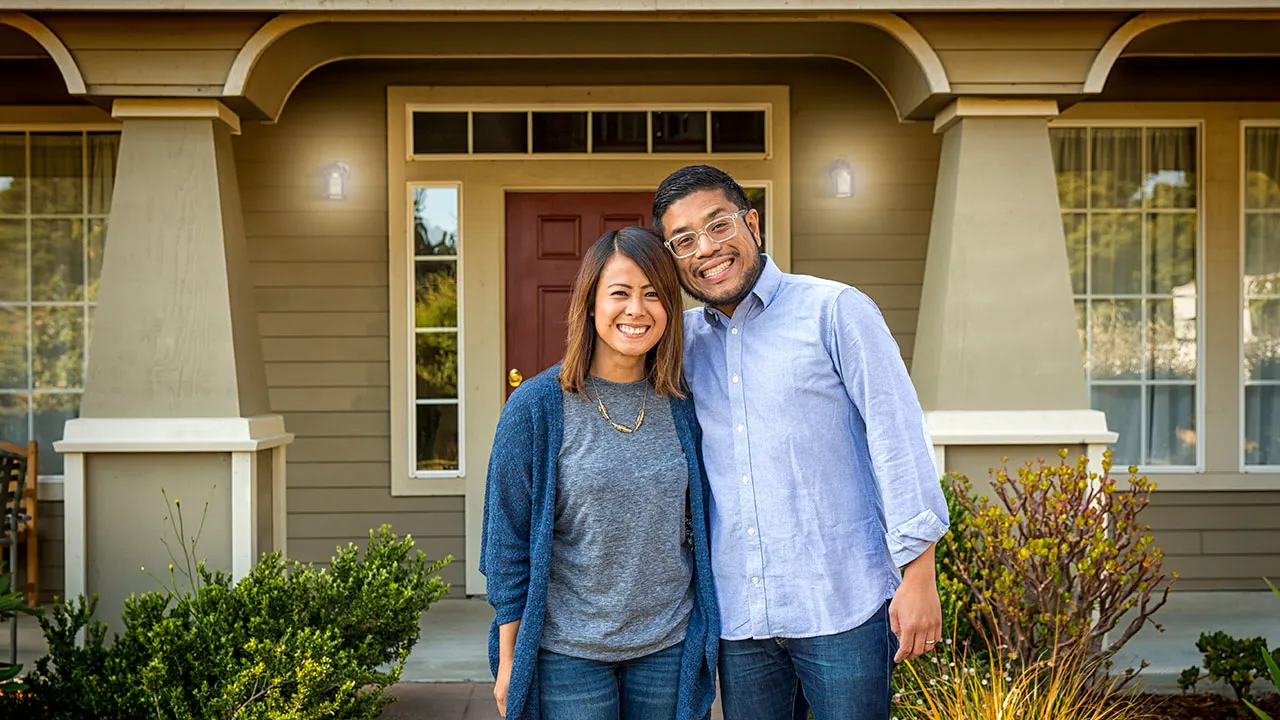
A home equity loan lets you borrow a lump sum against your home's value at a fixed rate. Learn how rates, terms, and repayment options work before applying.


A fixed-rate HELOC provides stable interest that helps with predictable monthly payments. Learn how they work and whether one is right for you.
A home equity loan lets you borrow against your home's value at a fixed rate with predictable monthly payments. Find out how it works and if it's right for you.
A home equity loan lets you borrow a lump sum against your home's value at a fixed rate. Learn how rates, terms, and repayment options work before applying.
A fixed-rate HELOC provides stable interest that helps with predictable monthly payments. Learn how they work and whether one is right for you.